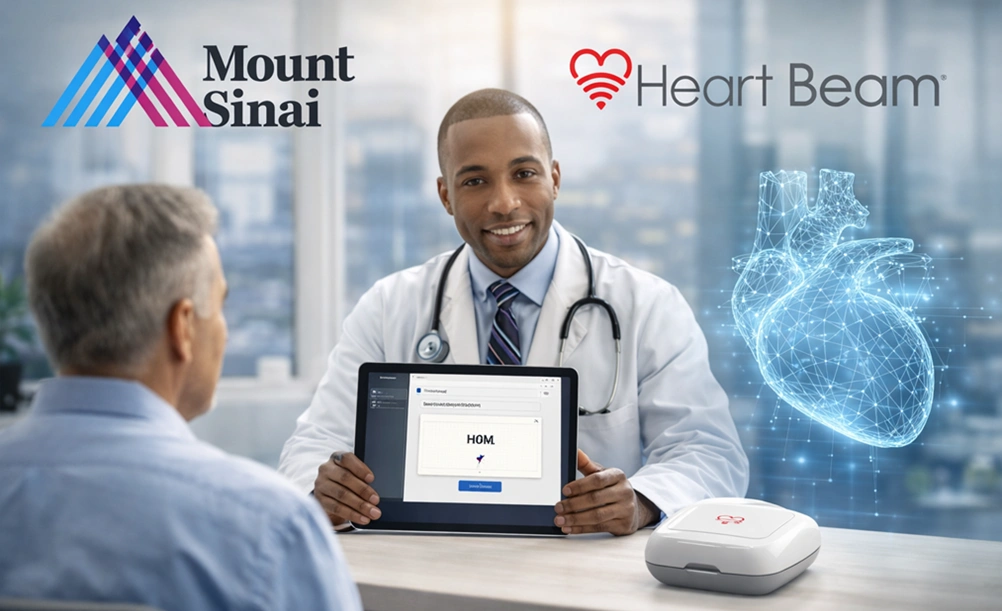
HeartBeam recently announced a strategic Cardiac AI Collaboration with the Icahn School of Medicine at Mount Sinai. This partnership accelerates the development of advanced AI-ECG algorithms. Furthermore, it brings clinical-grade heart monitoring directly into the home.
HeartBeam uses a patented 3D ECG platform for this project. This unique technology captures the heart’s electrical activity thoroughly. Consequently, it generates high-fidelity 12-lead ECG datasets outside traditional clinics. This data historically remained inaccessible to AI development teams. Now, researchers can build personalized algorithms for early disease detection.
“We believe expanding access to 12-lead ECG data assessment beyond the clinic is one of the biggest opportunities,” said Robert Eno, Chief Executive Officer of HeartBeam. “By pairing our ability to gather high-fidelity real-world ECG data with Mount Sinai’s extensive clinical data resources and AI expertise, we are creating a differentiated cardiac intelligence engine that can scale beyond traditional care settings and broaden the reach of predictive cardiology, ultimately expanding our clinical and commercial opportunity.”
Mount Sinai provides clinically annotated data and extensive AI expertise. Meanwhile, HeartBeam supplies the longitudinal, real-world synthesized ECG data. Together, they will train and validate various advanced AI models.
“While AI-ECG has rapidly progressed as a field over recent years, there is room for improvement in the portability and scalability of such algorithms beyond acquisition devices that require complex multi-electrode systems. Additionally, current approaches struggle to leverage deep learning inference opportunities outside of traditional health care settings, which is where dynamic changes to cardiovascular health first start before patients present for care. The collaboration addresses these vital needs. By combining deep learning tools with the ability to record full 3-dimensional cardiac electrical activity without cables, we can provide clinically meaningful and operationally pragmatic models at scale regardless of environment,” said Dr. Lampert, Cardiac Electrophysiologist, Medical Director of Machine Learning for Mount Sinai Fuster Heart Hospital and Director of Cardiovascular Artificial Intelligence for the Windreich Department of Artificial Intelligence and Human Health at Mount Sinai.
Ultimately, this Cardiac AI Collaboration expands predictive cardiology applications. It unlocks new opportunities in chronic disease management and wellness. Therefore, HeartBeam strengthens its leadership in modern cardiac intelligence platforms.
“Heart disease doesn’t only show up during a brief visit to the clinic. This collaboration gives us an opportunity to bring powerful clinical-grade heart monitoring into patients’ daily lives,” said Dr. Nadkarni. “By combining advanced AI with HeartBeam’s ability to capture full 12-lead ECG signals from home over time, we can study the heart in ways that simply haven’t been possible before—helping clinicians detect risk earlier and guide care more precisely.”
“This collaboration addresses an important need by leveraging deep learning and 3-dimensional waveform data for scalable diagnostic and predictive purposes, allowing insights beyond even expert human ability,” added Dr. Reddy, who serves as the Director of Cardiac Arrhythmia Services for Mount Sinai Health System.
Explore Health Tech Insiders for the latest medical innovations and reliable strategic insights driving the future of technology-driven healthcare transformation.
News Source: Businesswire.com