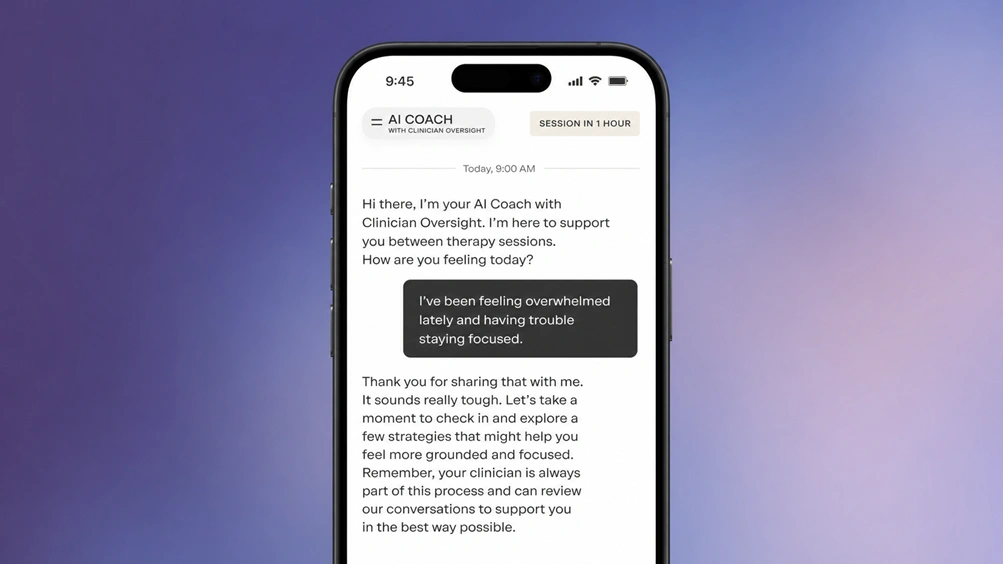
Grow Therapy just rolled out a new AI Coach. It is designed to offer extra support to clients when they are between their actual therapy sessions. The team built this system with direct clinician oversight from the start. This approach keeps therapists firmly at the center of the patient’s care. Essentially, the technology bridges the gap during the time between weekly or monthly appointments.
“Most people spend about an hour each week with their provider,” said Alan Ni, Chief Technology Officer and Co-founder of Grow Therapy. “At Grow Therapy, we’ve been exploring what support can look like during the other 167 hours, between sessions, outside care hours, and in the everyday moments when people are applying what they’ve learned. AI is reshaping how we care for our physical, mental, and emotional health. In mental healthcare, that change must be approached thoughtfully, with licensed professionals guiding how these tools are used and human empathy remaining at the core.”
Enhancing Patient Care Continuity
The goal is to maintain momentum in patient progress. Clients often face challenges in their daily lives between visits. This digital resource offers support during those times. It ensures that progress does not stall while the patient is away from the office. Clinicians retain visibility into these interactions to ensure safety and clinical alignment.
“As more people turn to AI tools for mental health support, we’ve seen a need for an approach that keeps providers involved in the process,” said Kevin M. Ramotar, Psy.D., CPHQ, Director of Clinical Product and AI. “Our AI coach was built to offer structured support between sessions, with clear boundaries, multiple safety layers, and clinician oversight. We designed it around what providers told us they needed: transparency, control, and technology that supports care without replacing clinical judgment. It helps clients stay engaged between sessions while giving providers greater visibility to drive better care experiences.”
The system monitors client engagement through secure interfaces. Therapists review this feedback to personalize future treatment plans. This approach aims to reduce high dropout rates in mental health care. By providing consistent support, the company intends to improve long-term patient retention. The integration of this technology into current workflows happens for providers. As digital tools become common in healthcare, this addition represents a shift toward more continuous, data-informed patient management strategies.
“Between sessions, [I encourage clients to] spend time reflecting on whatever we have talked about,” Lynn Whalen, a licensed clinical social worker based in Minnesota, said. She has found it to be particularly effective with patients who struggle with task initiation, procrastination, or perfectionism. “I explain what [Coach] is and what it isn’t,” added Whalen. “And one of the things I let them know is that this is not the resource that you go to if you’re feeling unsafe or you’re feeling like you want to hurt yourself.”
Built-in safety controls and provider oversight
Safety is central to how the AI coach works.
“We wanted to make sure we put safety first and weren’t just relying on one layer of protection. So we built multiple independent safety layers, automated quality scoring of every conversation, and ongoing review by a team of licensed clinicians,” said Matt Scult, Ph.D., Principal of Clinical AI.
Explore Health Tech Insiders for the latest medical innovations and reliable strategic insights driving the future of technology-driven healthcare transformation.
News Source: PRNewswire.com