Aptar Pharma and Macquarie University have launched a research collaboration focused on inhaled biologics. The three-year project operates under an Australian Research Council (ARC) Linkage Project. The program is titled “Unlocking the Potential of Dry Powder Carriers for Biologic Applications” (ARC LP250100089). The research will explore formulation strategies for pulmonary delivery of biologic medicines. It will also examine how different formulations perform through dry powder inhalation systems.
Aptar Pharma applies its advanced knowledge of drug delivery, dosing, and protection methods. In the meantime, Macquarie University provides its academic experience. In this way, the partnership will combine strengths to address issues associated with inhaled biologics.
“Biologic medicines represent a promising area of pharmaceutical development, yet significant challenges remain in translating their potential into effective inhaled therapies,” said Guillaume Brouet, Vice President, Scientific Affairs, Aptar Pharma. “By combining academic and industry expertise, this program will help advance scientific understanding of high-dose dry powder delivery and support the development of future inhaled biologic medicines.”
Advancing Dry Powder Delivery for Biologics
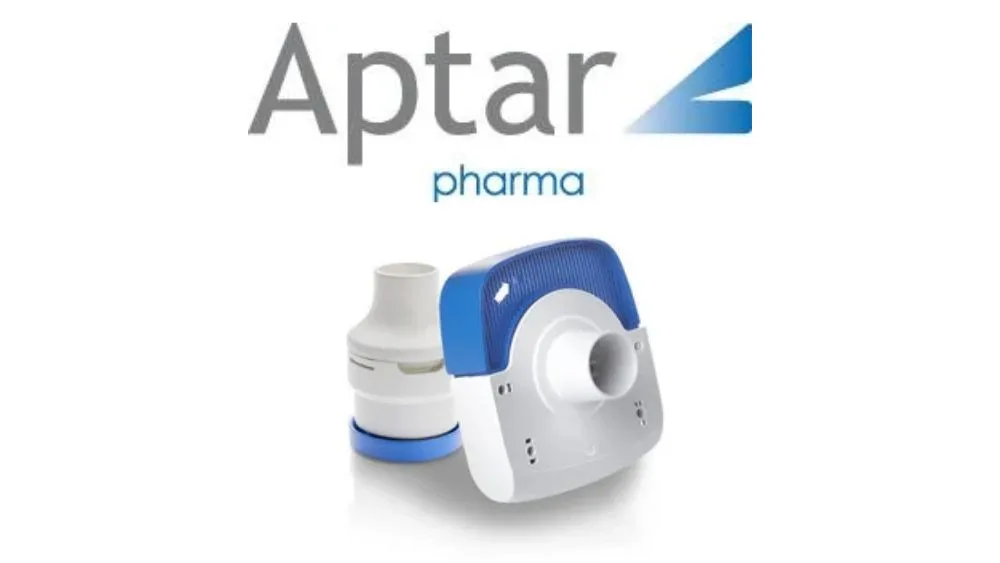
The collaboration is focused on Aptar Pharma’s Orbital™ dry powder inhaler platform. The platform enables delivery of high payload dry powder formulations. Researchers will study the effect of formulation variables on aerosol performance. They will perform these assessments on the Orbital™ platform. The research will improve the understanding of formulation design and device performance.
The project will also look at a number of different dry powder formulations. These are blended, engineered, combined formulations. Researchers will study how their characteristics affect aerosol behavior. The study will also evaluate the devices’ performance during delivery. Thus, the results may help researchers to better understand the interactions between the formulations and the inhalation devices.
Interest in inhaled biologics continues to grow across pharmaceutical development. However, developers still face several technical challenges in this area. Large doses can create difficulties during the delivery of complex biologic molecules. Developers must also maintain formulation integrity throughout the process. At the same time, formulations must achieve suitable aerosol performance.
Many biologic medicines may also require novel excipient systems. These systems can help maintain stability during formulation and delivery. Consequently, researchers continue to explore improved approaches for pulmonary drug delivery.
Research to Support Future Inhalation Technologies
The ARC, together with industry, will fund the research program for three years. The partnership brings together academic expertise with industry experience. Research capabilities in the area of respiratory science will be provided by Macquarie University. Aptar Pharma will contribute its inhalation science and pharmaceutical development expertise. The company will also share its expertise in drug delivery technology.
The project will also generate data for computational fluid dynamics (CFD) models. Such models can give further insight into the behavior of aerosols and the transport of particles. The models are expected to help future formulation development, said the researchers. They may also enhance the performance of the inhalation system.
The research could thus enhance understanding of dry powder delivery. It could also be used to aid future work on inhaled biologics and other complex medicines. The partnership is indicative of the growing research activity around pulmonary drug delivery. It also stresses the need for convergence of formulation science and device technology.
Collaboration aims development of inhaled biologics
The project will explore important questions about delivering dry powder biologics. It will also consider the influence of the properties of the formulation on the behavior of the aerosol. The research also seeks to correlate lab results to real delivery needs. This approach can assist researchers in assessing formulation and device performance.
“The ARC Linkage Program supports collaborations that translate scientific excellence into real-world impact,” said Prof. Daniela Traini, PhD, Professor of Respiratory Science, Macquarie University. “This project brings together researchers and industry experts to investigate critical questions in dry powder biologic delivery and support the future development of innovative inhaled therapies.”
The collaboration brings together pharmaceutical development and academic respiratory research. Therefore, it creates a platform for studying advanced approaches to biologic delivery. Aptar Pharma and Macquarie University will continue their work through the three-year program. The research will focus on formulation behavior, aerosol performance, and device interaction.
Ultimately, the goal of this project is to expand scientific knowledge about inhaled biologics. The results of the project may lay the ground for the development of high-dose formulations. Additionally, they could help improve the areas of pulmonary drug delivery and inhalation technology.
Explore Health Tech Insiders for the latest medical innovations and reliable strategic insights driving the future of technology-driven healthcare transformation.
News Source: Businesswire.com