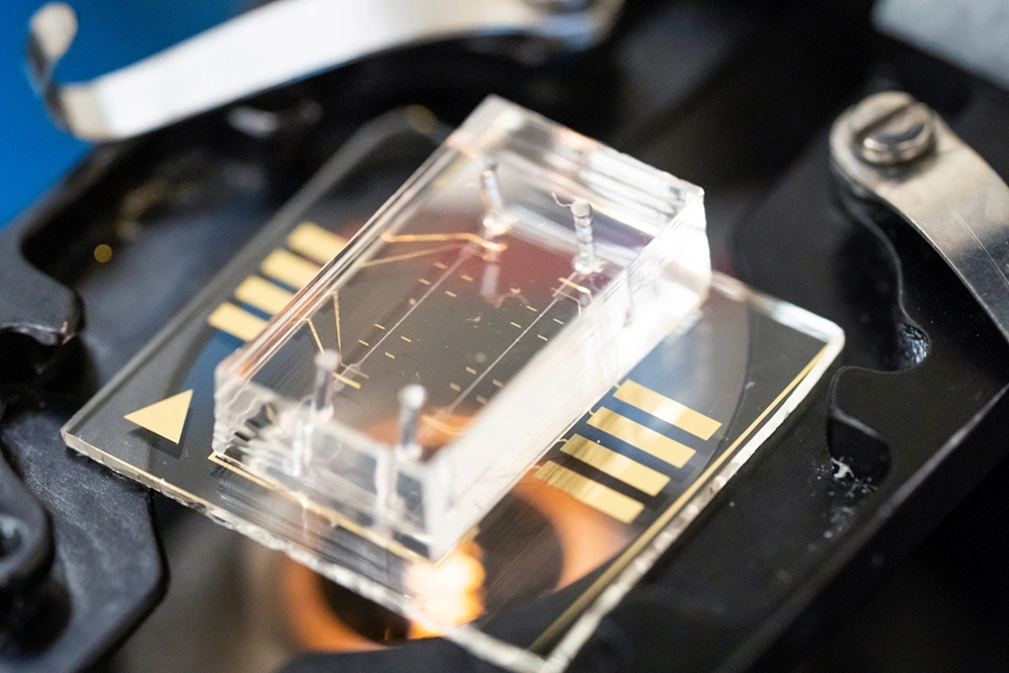
Researchers at City of Hope and the University of California, Berkeley created a microfluidic platform. The platform assesses breast cancer risk at the cellular level.
It squeezes individual breast epithelial cells to measure deformation, recovery, and stress behavior. The study appears in Lancet’s eBioMedicine and highlights clinical potential. More than 90 percent of women lack genetic predisposition or family history of breast cancer. Therefore, this approach could fill a critical gap in risk assessment and save lives.
“For women with a known genetic risk factor for breast cancer, there are things you can do like follow a higher-risk screening protocol. For everybody else, you’re left wondering, ‘Am I at high risk?’” said Mark LaBarge, Ph.D., a professor in the Department of Population Sciences at City of Hope. “By translating physical changes in cells into quantifiable data, this tool gives women something tangible to discuss with their doctors — not just risk estimates, but evidence drawn directly from their own cells.”
Researchers developed a machine learning algorithm to detect cells showing accelerated aging signs. The system calculates an individual breast cancer risk score using measurable cellular properties. Importantly, the AI platform uses simple electronics that support scalable and affordable deployment.
“Our team isn’t the first to measure the mechanical properties of cells; however, other approaches require advanced imaging technology that’s expensive, cumbersome and has limited availability,” said Lydia Sohn, Ph.D., the Almy C. Maynard and Agnes Offield Maynard Chair in Mechanical Engineering at UC Berkeley. “In contrast, MechanoAge uses computer chips that are simpler than an Apple Watch and ‘RadioShack parts’ that are cheap and easy to assemble, potentially making the device highly scalable.”
Mechanical Age and AI Risk Detection
About six percent of women with breast cancer carry known genetic mutations. However, others rely on indirect models like population data or breast density measurements. These models often overestimate or underestimate individual breast cancer risk significantly. Consequently, they may lead to over-screening, under-screening, or missed warning signs.
Currently, no non-genetic test identifies women at higher breast cancer risk early. Mammograms detect cancer only after it begins growing within breast tissue. Therefore, researchers shifted focus toward cellular-level physical changes using the MechanoAge platform.
Scientists discovered that breast cells have a measurable mechanical age separate from chronological age. Cells with higher mechanical age showed greater stiffness and slower recovery after compression. Interestingly, some younger women displayed cell behavior similar to older individuals. These cases involved women carrying genetic mutations linked to higher breast cancer risk.
Researchers refined algorithms to assign risk scores using multiple mechanical cell properties. The model successfully identified high-risk individuals across varied clinical sample groups. The collaboration spanned over twelve years, combining engineering innovation with cancer biology research.
Explore Health Tech Insiders for the latest medical innovations and reliable strategic insights driving the future of technology-driven healthcare transformation.
News Source: Businesswire.com