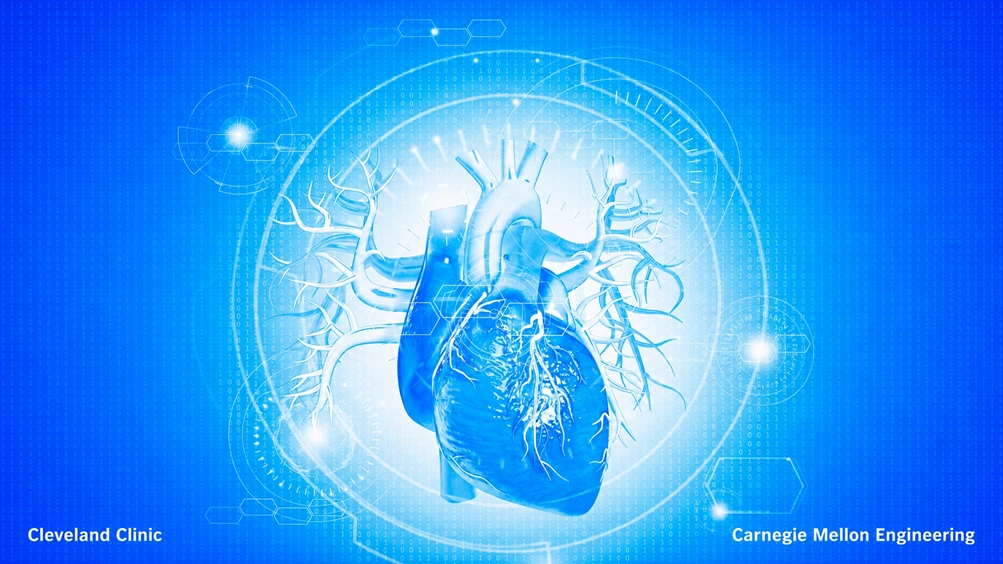
Carnegie Mellon University and Cleveland Clinic researchers developed a new Artificial Intelligence system to interpret complex cardiac MRI scans. This innovative Artificial Intelligence system functions without any manually labeled training data. Instead, the novel framework connects moving images of the heart with corresponding clinical radiology reports.
Interpreting a single exam takes trained specialists 40 minutes or more. The technology remains expensive and concentrated in major medical centers. Each study contains hundreds to thousands of images across multiple views.
The new model is called CMR-CLIP. It outpaced existing models by up to 35% during testing.
Advanced Neural Training and Testing Success
The team trained the Artificial Intelligence system using more than 13,000 de-identified real patient studies from the Cleveland Clinic. This process included over a million images and hundreds of thousands of motion sequences spanning more than a decade. The model achieved accuracy rates as high as 99% for certain heart conditions.
Furthermore, the system performed strongly on separate datasets from France and Cleveland Clinic Florida. The team published their complete research findings in Nature Communications.
“This work demonstrates that domain-specific foundation models can significantly outperform general-purpose AI systems in specialized clinical applications,” said Ding Zhao, associate professor in Carnegie Mellon University’s Department of Mechanical Engineering and co-principal investigator on the study. “By designing models that reflect the structure and complexity of cardiac MRI data, rather than adapting generic image models, we can unlock new levels of performance and clinical utility.”
“Cardiac MRI interpretation is highly specialized and time-intensive. Systems like CMR-CLIP have the potential to support clinicians through automated screening and interpretation support, particularly in settings where expert readers are limited. Such reader assistant tools are critical to improving patient access to this powerful diagnostic technology,” said David Chen, Ph.D., of Cleveland Clinic, a co-principal investigator on the project.
“This work highlights a new direction for medical AI by showing how large-scale clinical data can be used to train models without requiring time-consuming manual labeling,” said Deborah Kwon, M.D., Director of Cardiac MRI at Cleveland Clinic, clinical lead and co-author of this study. “This technology has the potential to not only improve efficiency but also quality of reporting to support more consistent and clinically meaningful interpretations, as well as serve as an important teaching tool in a highly specialized and complex imaging field.”
Explore Health Tech Insiders for the latest medical innovations and reliable strategic insights driving the future of technology-driven healthcare transformation.
News Source: Businesswire.com