Imricor Medical Systems, Inc. is backing stronger radiation protection measures across cardiovascular procedure environments. The company welcomed the Heart Rhythm Society’s recent call for urgent action. The recommendation focuses on clinicians and staff working in fluoroscopy-based procedure environments. Imricor is a pioneer in the interventional magnetic resonance (iMR) field.
The company supports enhanced protection wherever fluoroscopy remains necessary. However, Imricor believes healthcare can eventually move beyond exposure management. The company wants to eliminate ionizing radiation exposure when clinically appropriate.
“Protective equipment is important, and the multisociety consensus statement rightly highlights the need to better protect the people who deliver life-saving cardiovascular care every day,” said Steve Wedan, Imricor’s Chair and CEO. “But as they highlighted in the consensus statement, protective equipment is the least effective way to protect our healthcare workers from radiation. The most effective way is to eliminate the radiation in the first place. In an iMR lab, there are no X-rays. It is a zero radiation environment, and we are continually expanding the types of procedures that can be performed in this new kind of lab.”
The company says real-time MR guidance does not use ionizing radiation. Therefore, fully MR-guided procedures can create a radiation-free interventional environment. This approach can benefit patients, physicians, and procedural staff. It also provides real-time soft-tissue visualization during cardiac procedures. Moreover, MR guidance can provide information that conventional fluoroscopy cannot offer. This capability supports Imricor’s broader focus on safer cardiac intervention environments.
Radiation Exposure Remains a Concern in Cardiology
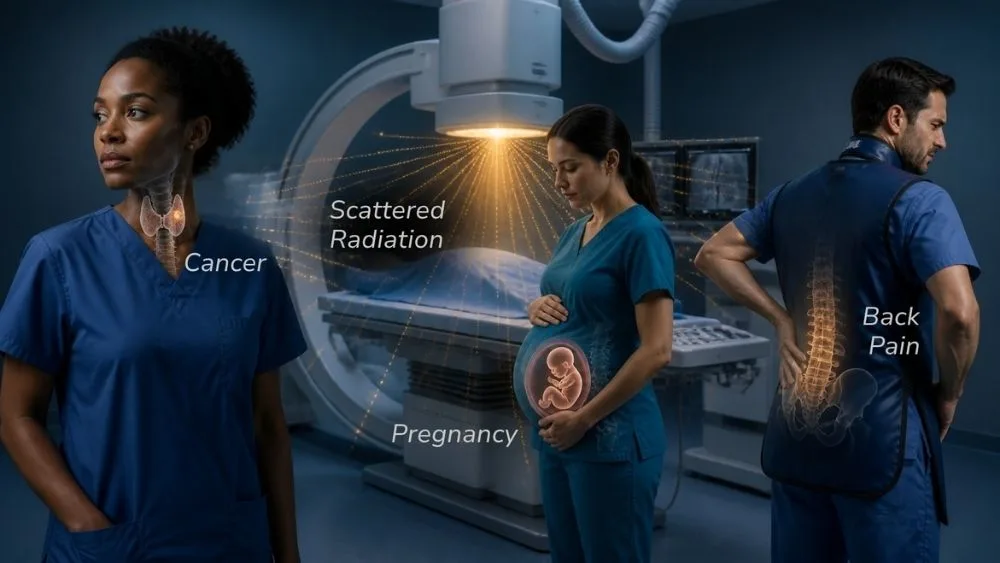
In interventional cardiology, radiation exposure at work is still acknowledged as a problem. Professionals in this field may be exposed to far more radiation than diagnostic radiologists. Published research has also shown a number of long-term problems related to fluoroscopy-based work. Among these concerns are changes to the lens of the eye caused by radiation.
Research has also raised concerns about potential cancer risks from extended radiation exposure. Wearing heavy protection gear for long periods of time might potentially lead to musculoskeletal problems. Radiation safety is therefore still very important for clinical teams and healthcare institutions. This issue also affects patients who require regular imaging and catheter-based procedures.
Physicians and procedural staff may encounter cumulative occupational exposure during their employment. For women working in interventional treatments, pregnancy poses special complications. Children and patients with congenital cardiac disease comprise another important group. Many of these people may require repeated procedures throughout their lives. Cumulative radiation exposure may therefore have a significant role in their long-term treatment. Hospitals and health systems must address these problems as the demand for cardiac intervention rises.
They need to protect clinical teams while retaining highly trained specialists. At the same time, they must develop sustainable procedure environments for future demand.
iMR Technology Supports Radiation-Free Procedures
Imricor’s iMR technology aims to support cardiac interventions within an MR environment. The company uses MR Conditional tools alongside real-time imaging capabilities. This approach represents another step in the development of procedural safety. Imricor sees healthcare moving through several stages of radiation protection. The progression includes awareness, dose minimization, and enhanced shielding. The company now sees radiation-free interventions as the next potential step.
As technology advances, more procedures could potentially move away from fluoroscopy-based environments. That transition could help reduce occupational exposure for healthcare professionals. It could also reduce radiation concerns for patients requiring repeated cardiac interventions. However, clinical decisions will continue to depend on the needs of individual procedures.
Imricor will continue working with physicians and hospitals around this objective. The company will also engage professional societies and occupational-safety advocates worldwide. The discussions will focus on advancing radiation-free cardiac interventions. Imricor plans to share its perspective with the broader cardiology community. The company will participate in discussions ahead of upcoming ESC and HRX congresses. It will also join the cardiology community during these major industry events.
Through these efforts, Imricor aims to expand awareness of radiation-free cardiac intervention technologies. The company continues to position iMR as an alternative approach to conventional fluoroscopy. Ultimately, Imricor believes cardiac care can continue evolving toward safer procedural environments. The company’s focus remains on expanding procedures that can operate without X-rays.
Explore Health Tech Insiders for the latest medical innovations and reliable strategic insights driving the future of technology-driven healthcare transformation.
News Source: Businesswire.com